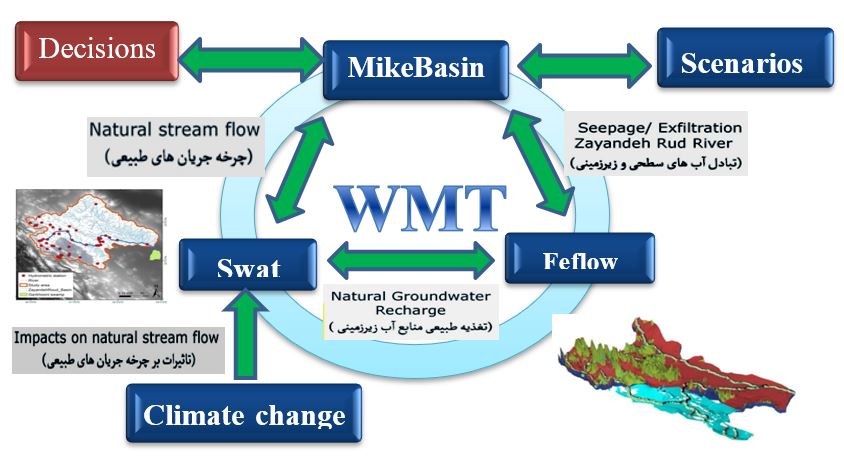

If the decision support system is operationalized as one of the main components of the IWRM process, the decision makers will be able to not only evaluate the possible effects of their decisions, but also by providing a platform that is agreed upon by all the stakeholders, to receive the feedback of the decisions by the stakeholders and water bearers. Make it possible for managers and decision makers. The presence of all stakeholders in the decision-making process guarantees attention to environmental, economic and social issues at all levels, or at least directs attention to these issues. Based on a high level of generalizability of the theory, the design principles of the watershed organization are suggested. The design of decision-making mechanisms, data and information sharing mechanism, monitoring mechanism and stakeholder participation mechanism in RBO are the most important design principles of a watershed. The implementation of integrated management of water resources requires establishing a balance between conflicting goals, and also in this management method, the paradigm shift has been from top-down management and command-control to a decentralized, collaborative and more flexible paradigm. In this order, according to the mentioned cases as well as the local conditions of Iran, the structure of Zayandehroud watershed was proposed.